Project details
Summaries of the two projects awarded the 2025 Bionexus Foundation Grant.
FUNCTIONAL RESTORATION OF THE RIUDARENES WETLANDS FOR THE CONSERVATION OF THE EUROPEAN POND TURTLE (Emys orbicularis): GENETICS, HYDROLOGY, TERRESTRIAL CYCLE, AND INVASIVE SPECIES
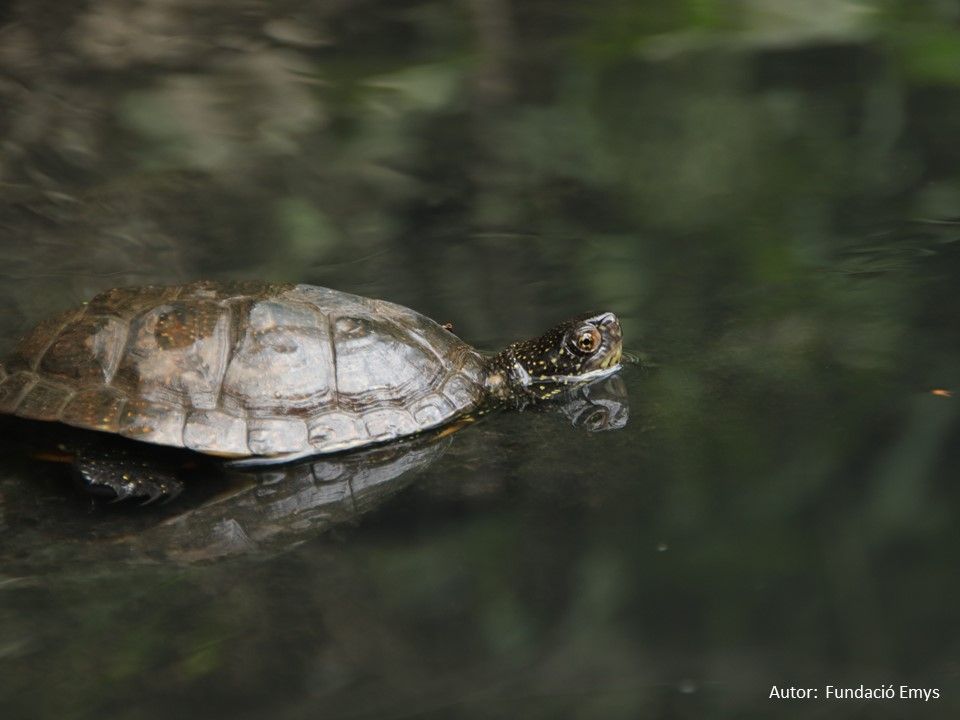
Fundació Emys is one of the winners of the Bionexus Foundation's first call for project grants with a research project focusing on the European pond turtle and the restoration of its habitats. The project aims to study the European pond turtle population in the Selva plain and improve its habitat.
The European pond turtle (Emys orbicularis) lives in ponds and streams, though it requires a surrounding terrestrial habitat for dispersal, nesting, and foraging. In Catalonia, it is endangered, having vanished from more than 50% of its range in just 30 years. In this context, the Selva plain hosts the most important population in the entire Catalan territory and one of the few that remains stable without requiring reintroductions. However, it is currently in a critical state: the population is aging, some ponds are overcrowded, and there is a lack of suitable habitats to complete its life cycle, many of which are occupied by exotic species.
Fundació Emys has extensive knowledge of the European pond turtle population in the Selva plain, built through 40 years of continuous monitoring. This expertise has enabled them to assess its situation and plan actions to improve its critical status. With funding from Bionexus, Fundació Emys aims to enhance knowledge of the species in the Selva Plain and restore its habitats to improve its conservation status.
Project Actions
The project consists of several actions combining applied research and habitat restoration.
To assess the connectivity of the European pond turtle population in the Selva plain, genetic data collected during the 2025 sampling campaign will be analyzed alongside data spanning more than 38 years of study. This will help clarify the current genetic status and determine whether dispersal between ponds correlates with improved genetic health. Additionally, it will identify the most frequently used movement corridors, isolated populations, and environmental factors conditioning the species' movements.
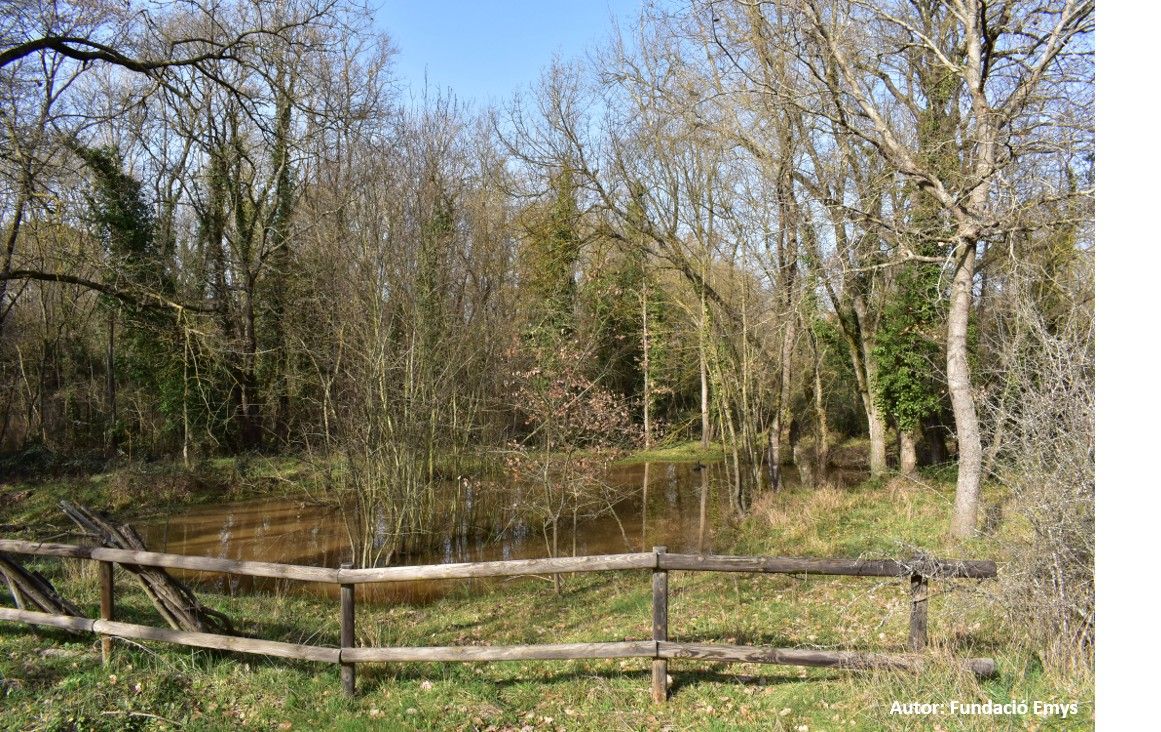
Driven by climate change and land-use alterations, turtle overcrowding in certain ponds and premature drying in others have been observed. To mitigate these impacts, a pilot test creating and naturalizing impermeable ponds will be conducted. Two ponds lined with waterproof membranes will be constructed and naturalized to ensure new functional water points year-round.
Regarding habitat improvement actions, open areas will be restored around five existing ponds inhabited by the European pond turtle to promote nesting. To achieve this, woody vegetation will be partially cleared while maintaining patches for shelter. Furthermore, invasive species such as the mosquitofish and the American red crayfish will be eradicated from an isolated water point using a combination of prior draining and manual capture.
Finally, to verify the effectiveness of the project's interventions, long-term annual monitoring will continue, complemented by radio-tracking 10 individuals to study their dispersal, use of new ponds, and colonization of restored spaces.
_____________________________________________________________________________________________________________________________________________________________
RESTORATION OF THE PONDS OF LES CLOSES ESTATE: HYDRAULIC ACTIONS, VEGETATION MANAGEMENT, AND ECOLOGICAL IMPROVEMENT
With a project dedicated to pond restoration in the Albera region, Fundació Alive has won the 2025 Bionexus Foundation grant for aquatic ecosystem conservation and restoration. The project aims to restore the natural moisture conditions of two ponds to promote the ecological functioning of hay meadows and temporary ponds.
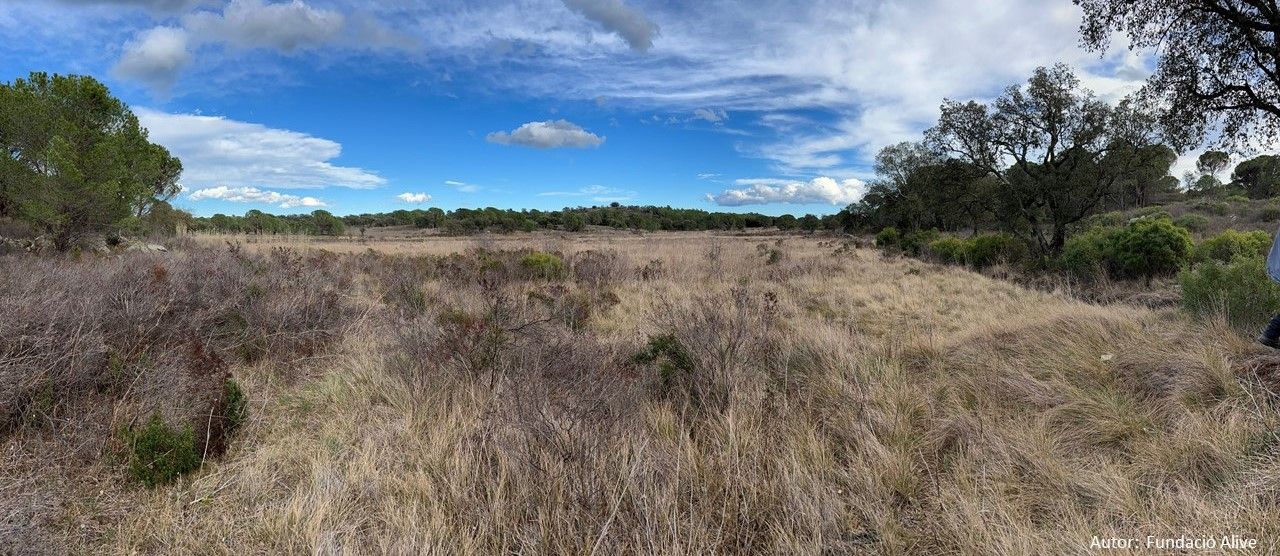
The Les Closes estate, located in Sant Climent Sescebes, lies outside the PEIN and Natura 2000 network, although its eastern boundary borders the protected area "Basses de l'Albera". This site possesses notable ecological value, featuring habitats of community interest—especially highly threatened wet hay meadows and mixed coniferous forests. The vulnerable species Juncus heterophyllus has also been identified alongside seasonally flooded areas of high value for amphibians and other wildlife. Despite these values, the estate is threatened by a historical drainage network that accelerates water evacuation, promotes premature drying of the ponds, weakens wet meadows, and facilitates colonization by woody vegetation and invasive species such as giant reed (Arundo donax).
To reverse the hydrological degradation process, increase biodiversity, and ensure the long-term conservation of the estate's hay meadows and wetlands, Fundació Alive plans to implement several actions focusing on pond hydrology and vegetation management.
Project Actions
In terms of hydrological restoration, partial blockages will be installed in the drainage channels of Estany Gran and the former Estany Pedragoler to recover and stabilize seasonal flooding. Increasing water retention time will enhance 23,727 m² of wet hay meadow habitat and restore an additional 7,836 m², benefiting hygrophilous flora and supporting breeding for amphibians such as the natterjack toad, Western spadefoot, and marbled newt.
Regarding vegetation management, an adaptive annual mowing schedule will be established, and giant reed will be cleared using manual and mechanical methods, including rhizome extraction and regular maintenance to prevent sprouting.
Finally, microhabitats will be created by stacking dry stone and deadwood to foster native wildlife, including reptiles, small mammals, hedgehogs, wood-boring invertebrates, and various amphibian species.
Copyright © 2026 Bionexus.